

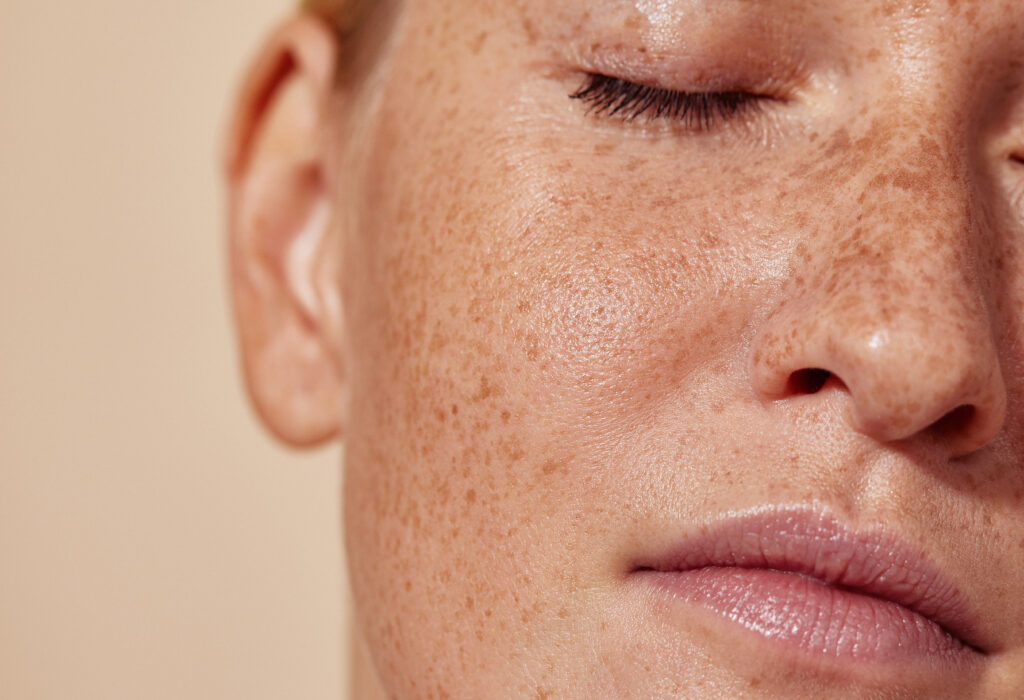
Many people ask what causes melasma when they notice brown or greyish patches appearing across the cheeks, forehead or upper lip. Melasma is a common form of facial pigmentation in which certain areas of skin produce excess melanin, the pigment that gives skin its colour. It tends to develop gradually and symmetrically, often on both sides of the face.
The short answer to what causes melasma is a combination of factors rather than a single trigger. Sunlight and visible light, hormonal changes, genetics and heat all play a role. In a sunny, humid climate like Singapore’s, ultraviolet and visible light exposure is a particularly relevant contributor, which is why melasma can be persistent and prone to recurrence.
Quick Answer:
- Melasma is patchy brown to greyish facial pigmentation, usually symmetrical.
- Sun and visible light exposure are major drivers, especially in tropical climates.
- Hormonal shifts (pregnancy, some contraceptives) can trigger or worsen it.
- Genetics and skin type influence who is more prone to it.
- It is a manageable but often recurring condition; a dermatologist can help tailor an approach.
What melasma looks like
Melasma typically appears as flat patches or freckle-like clusters in shades of brown to grey-brown. Common sites include the cheeks, bridge of the nose, forehead, upper lip and jawline. Unlike a single sunspot, melasma is usually diffuse and symmetrical, which is one feature a clinician looks for when distinguishing it from other causes of skin pigmentation.
Because several pigmentation conditions can look similar, an in-person assessment matters. Freckles, solar lentigines (sunspots) and Hori’s naevus can all coexist with melasma, and each may respond differently to management.
What causes melasma
Melasma is best understood as a condition with several overlapping contributors:
Ultraviolet and visible light:
Sun exposure stimulates pigment-producing cells. Visible light, including light from screens and the bright ambient light common outdoors in Singapore, can also play a part.
Hormonal influences:
Pregnancy (sometimes called the "mask of pregnancy"), hormonal contraception and hormone therapy are recognised triggers.
Genetic predisposition:
A family history of melasma increases the likelihood of developing it.
Skin type:
People with medium to darker skin tones, including many of Asian descent, are more commonly affected.
Heat and inflammation:
Heat and skin irritation may aggravate pigmentation in some individuals.
Because these factors interact, melasma often fluctuates, becoming more noticeable after periods of sun exposure or during hormonal changes and settling somewhat at other times.
Why the Singapore climate matters
Singapore sits close to the equator, so ultraviolet levels are high throughout the year and daylight is intense. Humidity and heat encourage more time spent outdoors and can make consistent sun protection feel less comfortable. These conditions make daily, year-round sun protection especially relevant for anyone managing facial pigmentation.
Practical steps that many dermatologists discuss include:
- Using a broad-spectrum sunscreen daily and reapplying through the day.
- Considering tinted sunscreens, which can help shield against visible light.
- Adding physical measures such as a wide-brimmed hat or seeking shade during peak hours.
How melasma is assessed
A dermatologist will usually take a history, ask about triggers such as pregnancy or medication, and examine the skin, sometimes with a specialised light to gauge how deep the pigment sits. Understanding the depth and pattern helps guide realistic expectations, because pigment closer to the surface tends to behave differently from deeper pigment.
This assessment also helps separate melasma from other concerns. If you are unsure what to expect from a consultation, this overview of your first dermatology appointment explains the general process.
Approaches to management
Melasma is typically managed rather than resolved in a single step, and approaches are individualised. Depending on the assessment, a dermatologist may discuss:
- Sun protection as the foundation, since ongoing light exposure can undo other efforts.
- Topical measures aimed at reducing pigment production, used under guidance.
- In-clinic procedures in selected cases, considered carefully because some treatments can aggravate melasma if not chosen appropriately.
Because melasma can recur, ongoing maintenance and review are often part of the plan. Aggressive or unsupervised treatment can sometimes worsen pigmentation, so a measured, monitored approach is generally preferred. You can read more about how the clinic approaches pigmentation on the skin procedures page.
When to see a dermatologist
Consider a professional assessment if pigmentation is new, changing, spreading, or affecting your confidence, or if home measures have not helped. A dermatologist can confirm whether the patches are melasma or another condition and help you set realistic expectations.
This article is for general information only and is not a substitute for medical advice. Please consult a qualified doctor or accredited dermatologist doctor in Singapore for advice specific to your situation.