

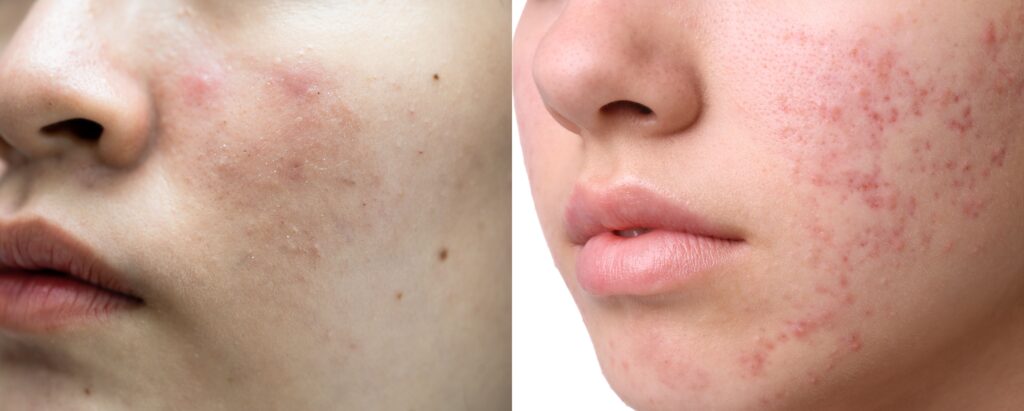
When it comes to rosacea vs acne, the two conditions can look similar at a glance because both can cause bumps and redness on the face. However, they are distinct conditions with different underlying causes, and telling them apart matters because the way each is managed can differ.
The main difference in the rosacea vs acne question comes down to a few features: rosacea tends to centre on facial redness and flushing with sensitivity, while acne is driven by blocked pores and typically involves blackheads and whiteheads. Understanding these clues can help you describe your skin more accurately, but a skin specialist’s assessment is the reliable way to confirm which condition you have.
Quick Answer:
- Acne usually involves blocked pores, blackheads and whiteheads; rosacea usually does not.
- Rosacea centres on persistent redness, flushing and visible blood vessels on the central face.
- Acne commonly affects the face, chest and back; rosacea mainly affects cheeks, nose, chin and forehead.
- Both can feature bumps, so overlap is possible and the two can coexist.
- A dermatologist can distinguish them and guide appropriate management.
What acne is
Acne develops when pores become blocked with oil and dead skin cells, sometimes with the involvement of bacteria and inflammation. It commonly appears around puberty but can also start or persist into the twenties and beyond. Because it is linked to oil-producing glands, acne often affects the face, chest and back.
Typical features of acne include:
- Blackheads and whiteheads (comedones), which are a hallmark of acne.
- Red pimples and, in some cases, deeper, tender lumps.
- Oiliness in affected areas.
- Post-inflammatory marks or pigmentation after spots settle.
What rosacea is
Rosacea is a long-term condition that mainly affects the central face: the cheeks, nose, chin and forehead. It tends to cause redness and flushing, and sometimes small bumps or visible blood vessels. Unlike acne, blackheads and whiteheads are not a feature of rosacea, and the skin is often sensitive and prone to stinging with certain products.
For a fuller explanation of the redness side of things, this article on rosacea and facial redness is a useful companion read.
Rosacea vs acne: key differences
| Feature | Acne | Rosacea |
|---|---|---|
| Blackheads/whiteheads | Common | Not typical |
| Main location | Face, chest, back | Central face |
| Redness/flushing | Possible around spots | Persistent and prominent |
| Visible blood vessels | Uncommon | Can occur |
| Skin sensitivity | Variable | Often heightened |
| Typical onset | Teens to twenties | Often adults, 30s onward |
Why the Singapore climate is relevant
Singapore’s heat, humidity and strong sun can affect both conditions. Heat and sun exposure are recognised triggers that can prompt rosacea flushing, while humidity and heavy sweating may aggravate acne-prone skin for some people. Gentle skincare and consistent, broad-spectrum sun protection are commonly recommended for both, though the finer details differ.
General measures that many people find sensible include:
- Using gentle, non-irritating cleansers rather than harsh scrubs.
- Applying broad-spectrum sunscreen daily.
- Noting personal triggers such as heat, spicy food or specific products.
- Avoiding picking or squeezing, which can worsen marks and inflammation.
Why getting the diagnosis right matters
Because acne and rosacea respond to different approaches, treating one as if it were the other can be unhelpful and, in some cases, aggravating. For example, some products suited to oily, acne-prone skin can irritate sensitive, rosacea-prone skin. A dermatologist can examine your skin, ask about triggers and history, and confirm the diagnosis, which sets the direction for management. You can learn what a consultation involves in this guide to your first dermatology appointment.
When to see a dermatologist
Consider an assessment if redness or bumps are persistent, worsening, or affecting your confidence, or if over-the-counter products have not helped or seem to irritate your skin. This is especially worthwhile if you are unsure whether you are dealing with rosacea, acne, or a mix of both.
Related pages on Dermatology & Co:
This article is for general information only and is not a substitute for medical advice. Please consult a qualified doctor or accredited dermatologist doctor in Singapore for advice specific to your situation.