

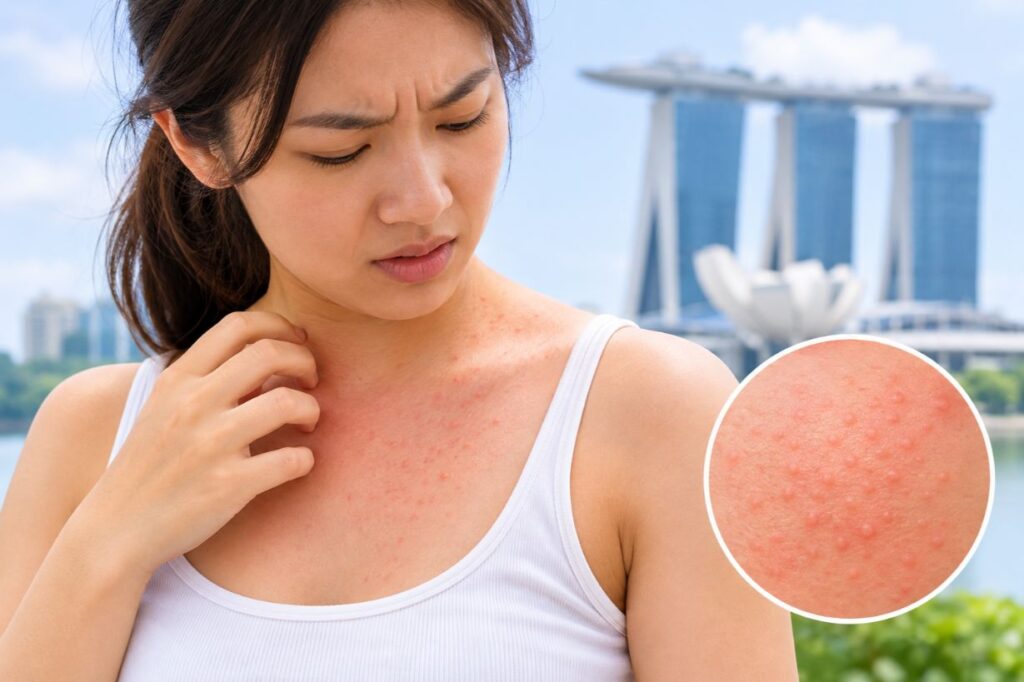
Heat rash, also called prickly heat or miliaria, is an itchy or prickly rash of tiny bumps that appears when sweat gets trapped under the skin. It is common in Singapore because the heat and humidity keep you sweating for long periods. Most heat rash settles within a few days once you cool down and let your skin breathe.
Key takeaways
- Heat rash happens when sweat ducts become blocked, so sweat leaks into the skin instead of reaching the surface.
- It usually appears in skin folds and covered areas, such as the neck, chest, back, armpits, waist and groin.
- Babies, people who exercise or work outdoors, and people who are unwell with a fever are more likely to get it.
- Cooling the skin and wearing loose, breathable clothing are the main ways to treat and prevent it.
- See a dermatologist if the rash lasts more than a few days, keeps coming back, becomes painful or looks infected.
What is heat rash (prickly heat)?
Heat rash is a skin reaction to blocked sweat glands. When you sweat heavily, especially under tight clothing or in skin folds, the openings of the sweat ducts can clog. Sweat then leaks into the surrounding skin and causes small bumps, itching and a prickling or stinging feeling.
Doctors call it miliaria. The name “prickly heat” comes from the pins-and-needles sensation many people describe. It is not an allergy and it is not contagious, so it cannot spread to other people.
What are the types of heat rash?
There are three main types, depending on how deep in the skin the sweat duct is blocked.
Type | What it looks like | How it feels | Who tends to get it |
|---|---|---|---|
Miliaria crystallina | Tiny clear, fluid-filled bumps, like beads of sweat under the skin | Usually not itchy | Newborns, people with a fever |
Miliaria rubra (prickly heat) | Small red bumps, often in clusters | Itchy, prickly or stinging | The most common type in adults and children |
Miliaria profunda | Firm, skin-coloured bumps | Often not itchy | Less common; usually people who have had repeated heat rash |
Miliaria rubra is the type most people in Singapore mean when they talk about prickly heat.
Why is heat rash so common in Singapore?
Singapore’s year-round heat and high humidity mean your skin is often damp with sweat, and humid air makes it harder for sweat to evaporate. That combination is ideal for blocked sweat ducts.
Everyday situations that raise the risk include:
- Commuting or walking outdoors in the midday heat
- Exercising outdoors or in poorly ventilated gyms
- Wearing tight clothing, synthetic fabrics or backpacks that trap sweat against the skin
- Sleeping without a fan or air-conditioning on a warm night
- Using heavy creams or ointments that block the skin
- Being unwell with a fever, or recovering in bed for long periods
Babies are especially prone because their sweat ducts are still developing, and they are often dressed too warmly or wrapped snugly.
How can you treat heat rash at home?
The main treatment is to cool the skin and stop the sweating that caused the rash. Mild heat rash usually improves within a few days once you do.
- Move to a cooler place. Air-conditioning or a fan helps sweat evaporate.
- Take a cool shower, then let your skin air-dry or pat it dry gently.
- Wear loose, light clothing made from cotton or other breathable fabrics.
- Avoid heavy creams, oils and thick ointments on the rash, as they can block sweat ducts further.
- Try a soothing lotion, such as calamine, for itch relief.
- Do not scratch. Scratching breaks the skin and can let bacteria in. Keep nails short, especially for children.
If the itch is troublesome, a pharmacist or doctor can advise on suitable options. Avoid applying strong creams to large areas of skin without advice, particularly on babies.
How do you prevent heat rash in Singapore's climate?
Prevention comes down to keeping your skin cool, dry and uncovered where possible. Small changes to what you wear and when you go out make a noticeable difference.
- Plan outdoor exercise for early morning or evening, when it is cooler.
- Choose moisture-wicking or cotton clothing, and change out of sweaty clothes promptly.
- Shower after exercise or a long commute.
- Keep your bedroom well ventilated at night.
- Dress babies in light layers and check the back of the neck for sweating.
- Use lightweight, non-greasy skincare in hot weather.
If you sweat heavily even when you are not hot or active, this may be hyperhidrosis, a condition where the sweat glands are overactive. Our page on excessive sweating (hyperhidrosis) explains the options a dermatologist can discuss.
Is it heat rash or something else?
Several other skin conditions can look like heat rash, especially in hot weather. Getting the diagnosis right matters because they are treated differently.
Eczema:
Heat and sweat are common triggers for flare-ups of atopic eczema, which causes dry, itchy, inflamed patches, often in the elbow and knee creases. In babies and young children, see our page on eczema in children.
Fungal infections:
Fungal skin infections thrive in warm, damp skin folds and usually cause a red, scaly rash with a clearer edge that slowly spreads.
Hives:
Some people develop itchy wheals when they get hot or sweaty, a type of urticaria (hives). These usually fade within hours.
Folliculitis:
small pimple-like bumps centred on hair follicles, sometimes caused by infection.
When should you see a dermatologist about heat rash?
See a doctor if the rash does not improve after three to four days of cooling measures, keeps coming back, or is affecting your sleep or daily life. A dermatologist can confirm whether it is heat rash or another condition and advise on treatment.
Seek medical care promptly if you notice:
- Increasing pain, swelling or warmth around the rash
- Pus, yellow crusts or red streaks spreading from the area
- A fever or chills with the rash
- Swollen glands in the armpit, neck or groin
- A rash in a baby who seems unwell, is feeding poorly or has a fever
If you are unsure what to expect, our guide to your first dermatology appointment in Singapore walks you through a typical visit.
Frequently asked questions
How long does heat rash last?
Mild heat rash usually clears within a few days once the skin is kept cool and dry. If it lasts longer than a week, keeps coming back or spreads, it is worth seeing a doctor to check for another cause.
Is heat rash contagious?
No. Heat rash is caused by blocked sweat ducts, not by an infection, so it cannot spread from person to person. If a rash becomes infected from scratching, that infection should be checked by a doctor.
Can adults get prickly heat?
Yes. Although it is very common in babies, adults in Singapore often get prickly heat after exercise, outdoor work, long commutes or sleeping in a warm room, especially under the chest, around the waistband and on the back.
Should I use powder for heat rash?
Some people find a light, fragrance-free powder helps keep skin folds dry. Avoid thick layers that cake, and keep powder away from a baby’s face so it is not breathed in. If the rash is not improving, see a doctor.
Can heat rash turn into eczema?
Heat rash does not turn into eczema, but heat and sweating can trigger eczema flares in people who already have it, and the two can look alike. A dermatologist can tell them apart.
This article is for general information only and is not a substitute for medical advice. Please consult a qualified doctor or accredited dermatologist doctor in Singapore for advice specific to your situation.